

Blog > How to Make a Smaller Campbell Home Feel Larger Before Selling
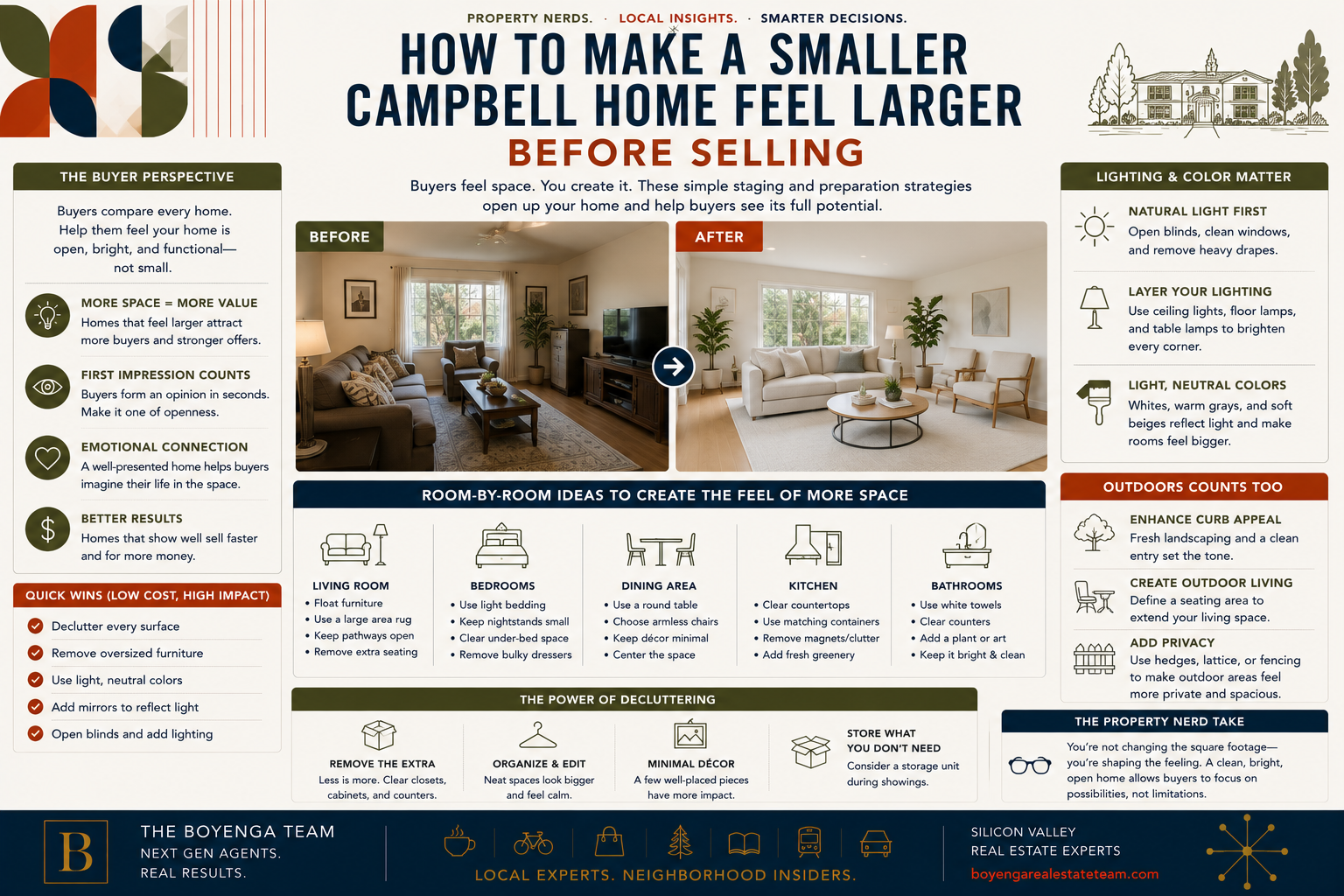 Square footage is one of the first numbers buyers see.
It's also one of the least accurate predictors of how a home actually feels.
Every week, buyers walk through two homes with nearly identical floor plans and leave convinced that one feels dramatically larger than the other. The difference rarely comes from additional square footage. Instead, it comes from presentation. Light, furniture placement, sightlines, color, and staging all influence how buyers experience a space within the first few minutes of a showing.
For sellers in Campbell—where many homes were thoughtfully built during the postwar era with efficient layouts rather than oversized rooms—creating that feeling of openness can significantly improve buyer perception.
The Boyenga Team regularly explores these buyer behaviors through the Property Nerds Blog at https://www.boyengateam.com/blog, examining how presentation, psychology, and design influence home values throughout Silicon Valley.
The process begins by helping buyers see the architecture instead of the belongings. Every piece of furniture competes with the room itself. Oversized sectionals, heavy dining tables, crowded bookshelves, and excessive décor visually reduce the available space even when the floor plan remains highly functional. Removing furniture rather than adding it often creates the greatest transformation because buyers begin noticing windows, natural light, and room proportions instead of objects.
Natural light remains one of the most effective ways to increase perceived space.
Clean windows, open window coverings, lighter paint colors, and layered interior lighting help rooms appear brighter and more expansive throughout the day. Buyers consistently associate bright interiors with newer, larger, and better-maintained homes—even when the actual square footage hasn't changed.
Sightlines also matter.
One reason Campbell's ranch homes continue attracting buyers is their straightforward floor plans. Sellers can reinforce that advantage by keeping hallways open, arranging furniture to preserve clear pathways, and minimizing visual barriers between living spaces. When buyers can naturally see from one room into another, the home immediately feels more open and connected.
Color plays a supporting role rather than a starring one. Neutral palettes reflect natural light more effectively while allowing buyers to imagine their own furniture and design preferences within the space. The objective isn't creating a home that feels empty—it is creating one that feels adaptable.
Outdoor living should receive the same attention.
Many Campbell homes feature usable backyards, patios, or side yards that effectively function as additional living space. Thoughtfully staging these areas with comfortable seating, clean landscaping, and defined gathering spaces helps buyers mentally extend the home's footprint beyond its interior walls. A modest home with exceptional indoor-outdoor flow often feels substantially larger than its square footage suggests.
Architecture contributes to this perception as well. Campbell's classic ranch homes emphasize practical layouts, generous windows, and strong relationships between interior and exterior spaces—qualities that continue supporting buyer demand decades after they were built. Buyers interested in how timeless residential design influences long-term desirability can also explore https://midmodhomes.com, where California architecture is examined across many of Silicon Valley's most desirable neighborhoods.
Perhaps the biggest mistake sellers make is attempting to demonstrate how much furniture fits inside the home.
Buyers aren't measuring storage capacity.
They're measuring possibility.
A room with fewer pieces often feels more functional because buyers can immediately imagine arranging it around their own lives rather than navigating someone else's.
The Boyenga Team's neighborhood guides at https://boyengarealestateteam.com regularly examine how presentation, architecture, and buyer psychology work together to maximize home values throughout Campbell and the greater Silicon Valley market.
Ultimately, making a smaller home feel larger isn't about creating an illusion.
It's about removing distractions.
When natural light becomes more noticeable, circulation improves, and each room clearly communicates its purpose, buyers stop focusing on square footage and begin focusing on how comfortably they could live there. That shift in perception often becomes one of the most valuable improvements a seller can make before listing.
For buyers and sellers interested in architecturally significant neighborhoods throughout Silicon Valley—including Eichler communities and other thoughtfully planned California residential developments—https://bayareaeichlerhomes.com offers additional perspective on how design continues supporting both lifestyle and long-term value.
The Property Nerd Take
Buyers don't purchase square footage—they purchase how a home feels. A well-presented 1,500-square-foot Campbell ranch can feel more spacious than a poorly staged 2,000-square-foot home. Great presentation doesn't change the floor plan. It changes the buyer's experience of it.