
Blog > The 2026 Silicon Valley Luxury Design Audit: What Feels Current—and What Already Looks Dated
The 2026 Silicon Valley Luxury Design Audit: What Feels Current—and What Already Looks Dated
by
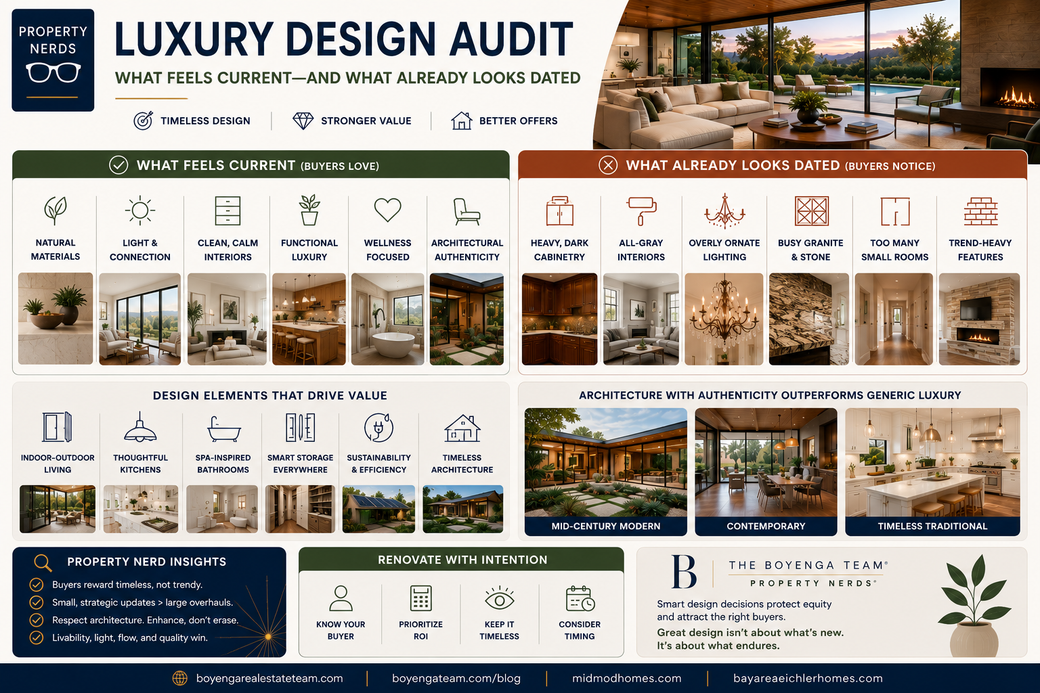
Luxury home design evolves quietly. Unlike fashion, where trends change overnight, residential design tends to shift gradually until one day a home simply feels current—or unmistakably tied to another era.
Today's Silicon Valley buyers aren't necessarily looking for the newest home. They're looking for a home that feels timeless, functional, and intentional. In many cases, they will pay a premium for architecture from the 1950s or 1960s while overlooking a remodel completed only ten years ago if it already feels dated.
The difference isn't age.
It's relevance.
Understanding what today's buyers respond to—and what they increasingly overlook—can help sellers make smarter preparation decisions before bringing a home to market.
Buyers Want Timeless More Than Trendy
One of the biggest shifts we've observed is a move away from renovations that clearly belong to a particular design era.
Highly stylized remodels often have a shorter lifespan than homeowners expect. Materials that once felt luxurious can quickly become visual timestamps, making buyers wonder when the home was last updated.
Timeless design tends to outlast trends because it emphasizes proportion, natural materials, quality craftsmanship, and restraint.
Homes that avoid chasing trends often remain desirable much longer.
Natural Materials Continue to Lead
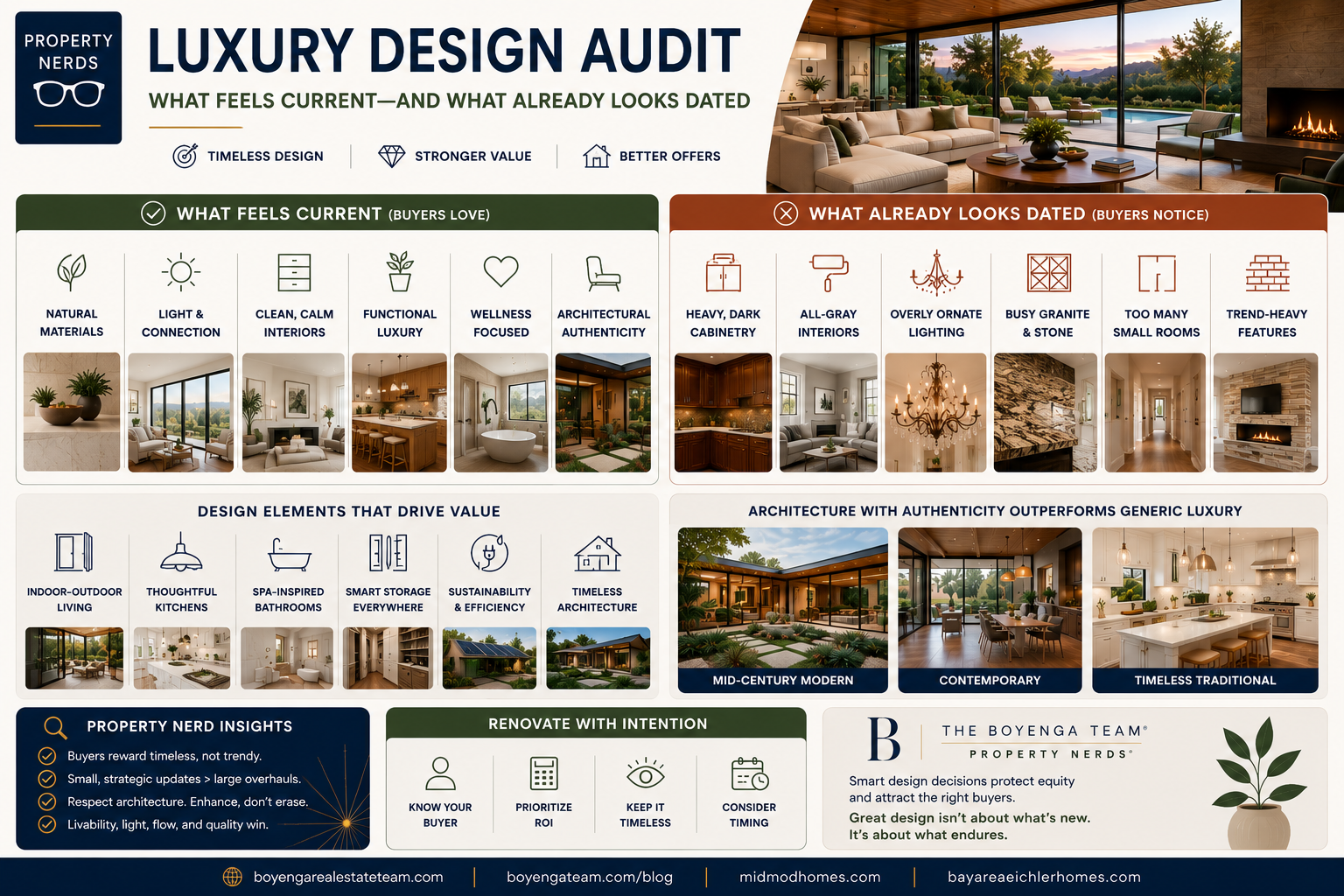
Luxury buyers increasingly gravitate toward materials that feel authentic rather than manufactured.
Design elements that continue to resonate include:
- White oak and walnut cabinetry
- Natural stone with subtle movement
- Limewash and textured plaster finishes
- Warm metal accents
- Wide-plank hardwood flooring
- Organic landscaping
- Large-format windows connecting indoor and outdoor spaces
These materials create warmth without feeling overly decorative.
Dark Gray Is Giving Way to Warmth
A decade ago, cool gray interiors dominated Silicon Valley remodels.
Today, buyers generally respond more positively to warmer palettes inspired by natural materials and softer textures.
Warm whites, muted greens, earthy neutrals, light wood tones, and layered textures create homes that feel brighter, calmer, and more inviting.
The goal is balance—not dramatic contrast.
Kitchens Continue to Simplify
Luxury kitchens remain one of the most influential spaces in a home, but buyer expectations have changed.
Instead of emphasizing ornamentation, buyers increasingly notice thoughtful details:
- Hidden appliances
- Integrated storage
- Large functional islands
- Minimal upper cabinetry
- Layered lighting
- Clean architectural lines
The kitchen has become less about showcasing luxury and more about supporting everyday living.
Wellness Is Becoming Part of Design
Luxury buyers are placing greater value on homes that feel healthy and restorative.
Natural light, improved ventilation, indoor-outdoor living, quiet spaces for work, drought-conscious landscaping, and energy-efficient systems are increasingly viewed as everyday expectations rather than premium upgrades.
Design is expanding beyond aesthetics into quality of life.
Character Beats Generic Luxury
Perhaps the most important shift is that buyers increasingly reward authenticity.
An original Eichler that respects its architectural heritage often feels more compelling than a heavily remodeled version that erased its defining features.
Likewise, thoughtfully updated ranch homes, mid-century residences, and contemporary architecture frequently outperform generic "luxury flips" because they retain a clear identity.
Architecture should guide renovation—not disappear beneath it.
For homeowners considering mid-century properties, Bay Area Eichler Homes and Mid Mod Homes provide additional insights into preserving architectural character while maximizing market appeal.
What Already Feels Dated?
While every buyer has personal preferences, several design choices are becoming less common in today's luxury market:
- Cool gray interiors throughout the home
- Overly ornate lighting fixtures
- Heavy espresso cabinetry
- Busy granite countertops
- Excessive feature walls
- Highly compartmentalized floor plans
- Decorative finishes that overwhelm the architecture
None of these automatically reduce value.
However, they can make a home feel older than it actually is.
The Property Nerd Take
Great design doesn't chase trends.
It creates spaces that continue to feel relevant years after they're completed.
The strongest Silicon Valley homes combine timeless materials, thoughtful architecture, functional living, and subtle luxury without feeling overly designed.
At the Boyenga Team, we view design through the lens of buyer behavior rather than personal preference. Understanding what today's buyers value—and why—helps sellers make preparation decisions that protect both architectural integrity and long-term resale value.
Because the best luxury homes don't simply look expensive.
They feel timeless.
For additional Silicon Valley architecture and design insights, explore the Property Nerds Blog, Mid Mod Homes, Bay Area Eichler Homes, and Boyenga Real Estate Team.
keep exploring · property nerd guides
Thinking about a move in Silicon Valley?
The Boyenga Team at Compass has helped clients buy and sell more than 2,520 homes since 1996. Start with a guide, a search, or a conversation.
Search Silicon Valley homesWhat’s my home worth?
Talk to a Property Nerd: (408) 373-1660 · (650) 383-8606
city guides Palo Alto · Los Altos · Menlo Park · Cupertino · Sunnyvale · Los Gatos · San Jose