

Blog > West San Jose's Mid-Century Housing Stock: Ranch Homes, Eichlers, and Postwar Design
West San Jose's Mid-Century Housing Stock: Ranch Homes, Eichlers, and Postwar Design
by
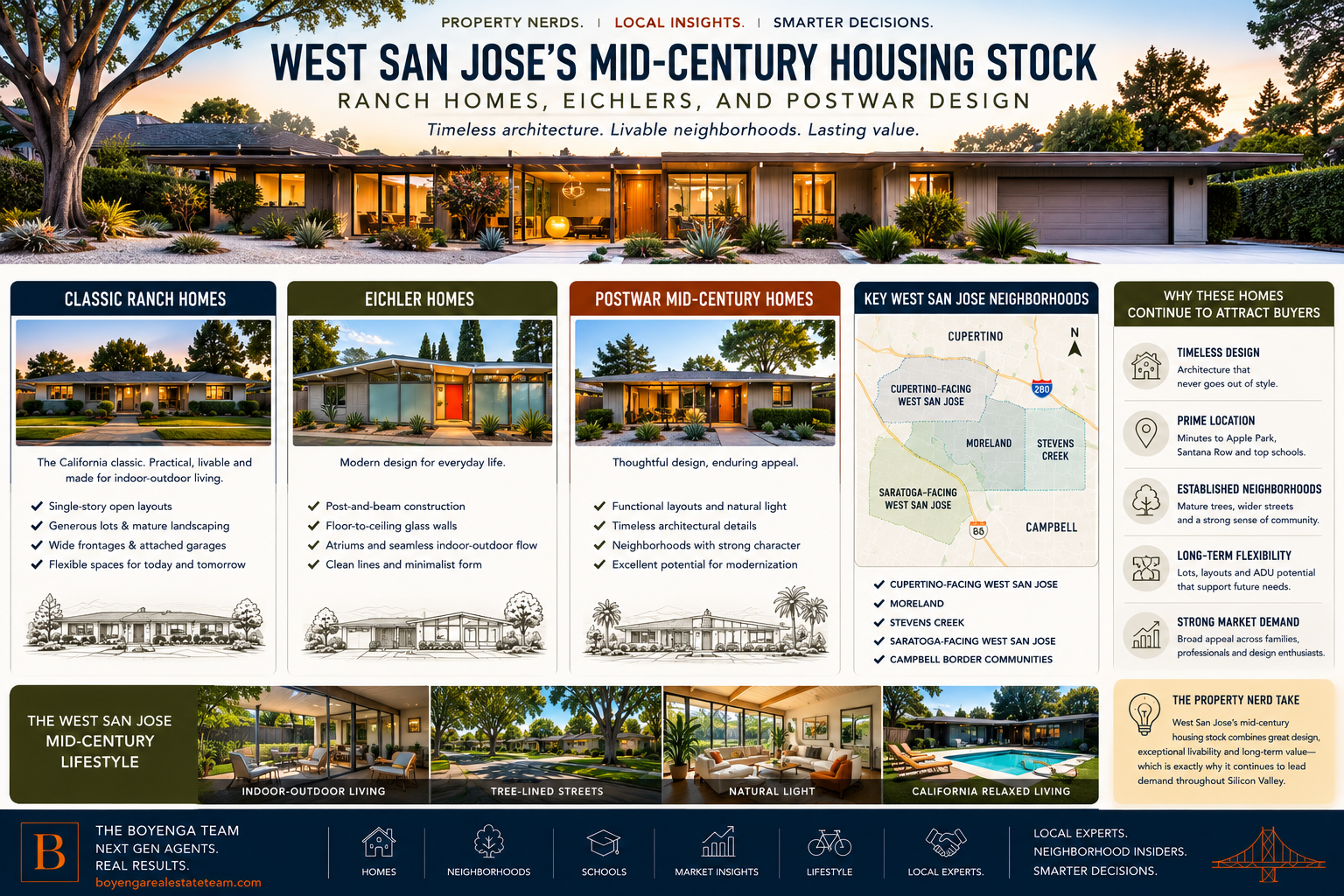 West San Jose owes much of its character to a remarkable period of residential construction that transformed Silicon Valley after World War II.
Long before the region became synonymous with global technology companies, builders were creating neighborhoods centered on sunlight, practical living, generous lots, and a distinctly Californian relationship between indoor and outdoor space. Those principles still define much of West San Jose today, making it one of the Bay Area's richest collections of mid-century residential architecture.
While buyers often focus on square footage or recent renovations, the real value frequently lies in something far more enduring: the quality of the original neighborhood design.
The Boyenga Team regularly explores these architectural patterns through the Property Nerds Blog at https://www.boyengateam.com/blog, helping buyers understand why timeless neighborhood planning continues shaping Silicon Valley home values decades after construction.
The majority of West San Jose's housing stock consists of classic California ranch homes built throughout the 1950s and 1960s. These homes emphasized functionality over ornamentation. Single-story layouts, attached garages, generous front setbacks, large picture windows, and spacious backyards created homes that worked naturally for everyday family life. Their simplicity has proven remarkably adaptable, allowing generations of owners to modernize kitchens, expand living spaces, and improve energy efficiency without losing the architectural qualities that originally made the neighborhoods successful.
Interwoven throughout portions of West San Jose are Eichler homes, representing one of California's most influential residential design movements.
Joseph Eichler challenged traditional suburban housing by introducing floor-to-ceiling glass, exposed post-and-beam construction, interior atriums, open floor plans, and seamless connections between indoor and outdoor living. Rather than treating architecture as decoration, Eichler designed homes that encouraged light, openness, and interaction with nature. Today, these properties continue attracting buyers who appreciate thoughtful design and architectural authenticity.
Buyers interested in Eichlers and California mid-century architecture can explore https://bayareaeichlerhomes.com, where these communities are examined in greater depth throughout Silicon Valley.
Not every mid-century home in West San Jose carries the Eichler name, however.
Many builders adopted similar principles while interpreting them differently. Postwar neighborhoods throughout the area include clean rooflines, efficient floor plans, large windows, mature landscaping, and carefully proportioned lots that continue supporting comfortable living today. Together, these homes create neighborhoods with remarkable consistency, where architecture contributes to a cohesive street character rather than competing for attention.
The Boyenga Team's broader neighborhood analysis at https://boyengarealestateteam.com regularly compares these architectural styles while examining how neighborhood design influences buyer demand, resale performance, and long-term appreciation.
One reason mid-century homes remain so desirable is their flexibility.
Unlike many newer homes built around highly specific design trends, ranch homes and postwar layouts adapt well to changing lifestyles. Home offices, expanded kitchens, additional family rooms, ADUs, and outdoor entertaining spaces can often be incorporated without fundamentally altering the home's original character. Buyers recognize that flexibility as both a lifestyle advantage and a long-term investment opportunity.
The neighborhoods themselves also contribute substantial value.
Wide residential streets, mature trees, generous setbacks, neighborhood parks, and relatively low-density planning create environments that remain difficult to replicate through contemporary development. Because these communities are largely built out, improvements tend to occur gradually through renovation rather than wholesale redevelopment, preserving the established character that continues attracting buyers.
Mid-century architecture has also experienced a meaningful shift in buyer perception.
What was once considered simply "older housing" is now widely appreciated for its clean design, livability, and historical significance. Buyers increasingly seek authentic architectural details, natural light, and thoughtful proportions rather than purely decorative finishes. This evolution has strengthened demand for well-preserved ranch homes and Eichlers throughout West San Jose.
The most successful renovations acknowledge this reality.
Rather than erasing original design elements, thoughtful remodels preserve the home's architectural identity while integrating modern materials, energy efficiency, and contemporary functionality. Homes that respect their original design often feel more timeless than renovations chasing short-lived trends.
Ultimately, West San Jose's mid-century housing stock represents more than a collection of older homes.
It reflects an era when neighborhood planning, architecture, and lifestyle were considered together. That philosophy continues benefiting today's buyers, creating communities that remain practical, beautiful, and highly desirable more than half a century after they were first built.
For buyers interested in California's broader collection of architecturally significant communities, https://midmodhomes.com offers additional insight into how ranch homes, Eichlers, and other mid-century neighborhoods continue shaping Silicon Valley's residential landscape.
The Property Nerd Take
West San Jose's greatest architectural strength isn't found in a single home—it's found in entire neighborhoods built around timeless design principles. Ranch homes, Eichlers, and postwar communities continue attracting buyers because good architecture doesn't become obsolete. It simply becomes more appreciated over time.